Rava (Sooji) Upma Recipe for beginners| Easy Upma breakfast Recipe
Popular South Indian morning dish upma is cooked with vegetables, spices, herbs, and cream of wheat or semolina flour (referred to as rava or suji locally). The upma recipe I'm sharing here is still a family favourite and was adapted from my mom's recipe. The rava upma, also known as suji ka upma, has a flavorful taste that is so incredibly gratifying that it will quickly become your new favourite breakfast option.
What is the Upma?A few lentils, nuts, vegetables, herbs, and spices are combined with cream of wheat or semolina flour, also known as rava or suji, to make the delicious, savoury, and well-liked South Indian morning dish known as upma.
Ghee may be replaced with oil to make this piping hot breakfast meal vegan. This upma is really wonderful and full of warmth and flavour. So why not give something different a try instead of that monotonous muesli?
The many fried and sautéed ingredients used for tempering are what actually set an upma dish apart. Depending on the recipe, these components may change, but they often include some savoury, nutty, and sweet flavours.
In Maharashtra and other parts of South India, eateries serve upma, a typical morning dish. South Indian houses also frequently cook this breakfast. In actuality, when I was a child, upma was a staple for breakfast or an evening snack in our home.
Grinded wheat to a fine or semi-fine texture, rava is the result. It has a fine, gritty texture without being floury. In English, rava is sometimes known as cream of wheat, farina, or semolina flour.
Use the finer-textured rava to produce upma. The rava variation available in Indian markets under the name Bombay rava can also be used.
Pro Tip for Creating Upma Faster
You can whip up this cosy, homemade meal quite quickly, especially if you remember this one simple step. You can see the first few steps of roasting the rava (cream of wheat) in the step-by-step visual instruction below.This hot breakfast of upma dish may be made in only 15 to 20 minutes if your rava is already roasted. Additional dishes that call for roasted rava include Rava Cheela and Rava Pongal.
Comprehensive Guide
Making the Upma Recipe
Prepare and Roast the Rava
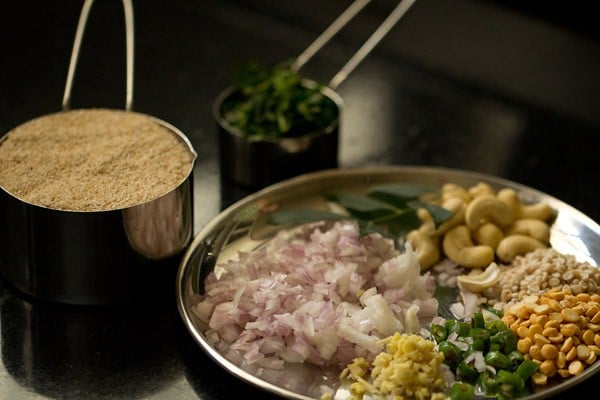
1. To create the upma recipe, first prepare the ingredients. Measure out 1 cup fine-grain rava and leave it aside. Next, prepare the herbs, spices, lentils, nuts, and aromatics. You'll require:
- ⅓ finely chopped onions
- 1 teaspoon chopped green chillies
- 1 teaspoon finely chopped ginger
- 2 tablespoons coriander leaves (cilantro)
- 8 to 10 curry leaves
- 10 to 12 cashews
- 1 teaspoon chana dal (hulled and split bengal gram)
- 1 teaspoon urad dal (hulled and split black gram)
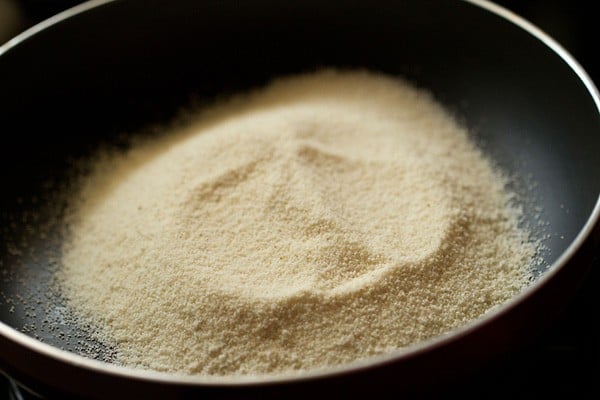
2. Heat a pan or kadai first. Add 1 cup rava or cream of wheat (fine variety).
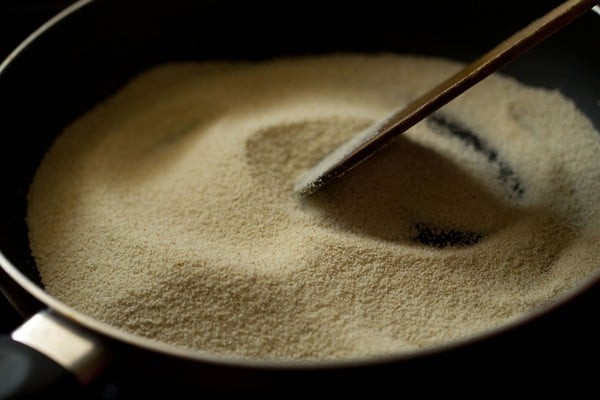
3. Begin to roast the rava. Stir often while roasting the rava.
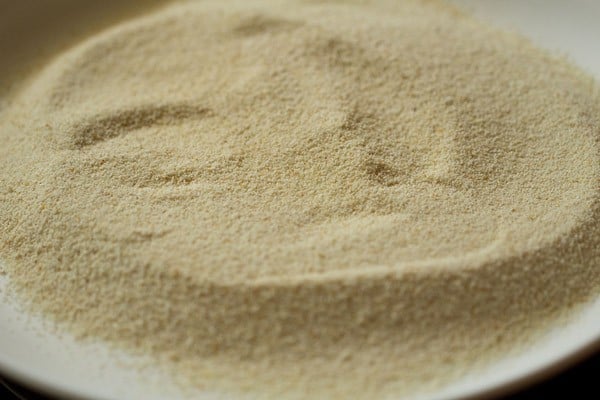
4. The rava or sooji grains should become fragrant and start to look dry, separate and crisp. Don’t brown the rava.
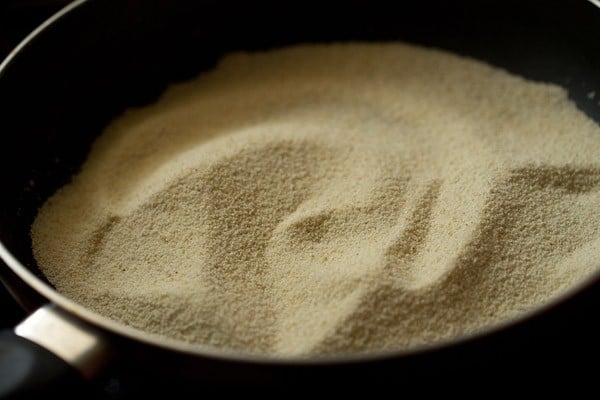
5. Once the rava becomes fragrant and starts to look dry and crisp, switch off the flame and put the roasted rava on a plate and set aside.
Fry and Sauté Spices, Nuts & Aromatics
6. In a pan, heat 2 tablespoons ghee (clarified butter) or oil. You could use sunflower oil or peanut oil or safflower oil or any neutral tasting oil.
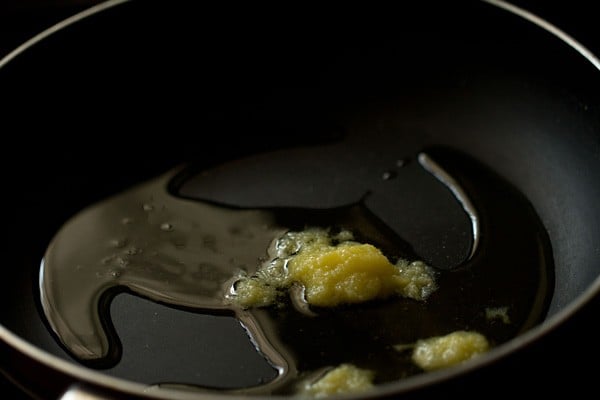
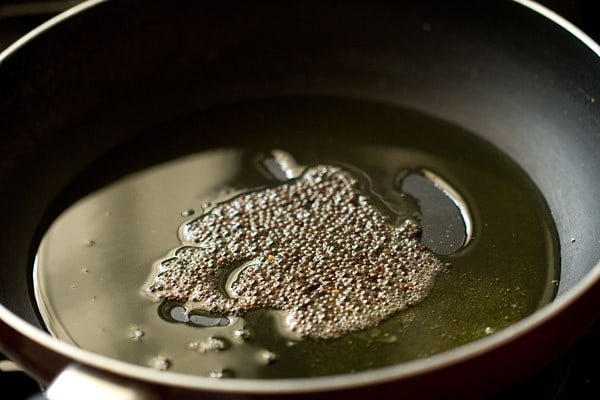
7. Lower the heat. Add 1 teaspoon mustard seeds. When you hear the crackling sound of mustard seeds, it means they are getting fried.
8. Now add the following ingredients:
- ½ teaspoon cumin seeds
- 1 teaspoon chana dal (husked and split bengal gram)
- 1 teaspoon urad dal (husked and split black gram)
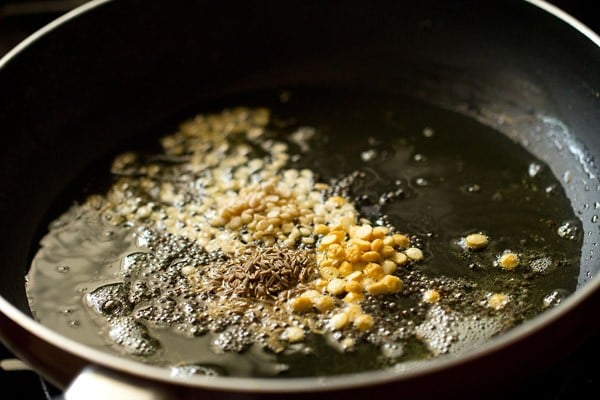
9. Stirring often fry until the chana dal and urad dal begin to brown a bit.
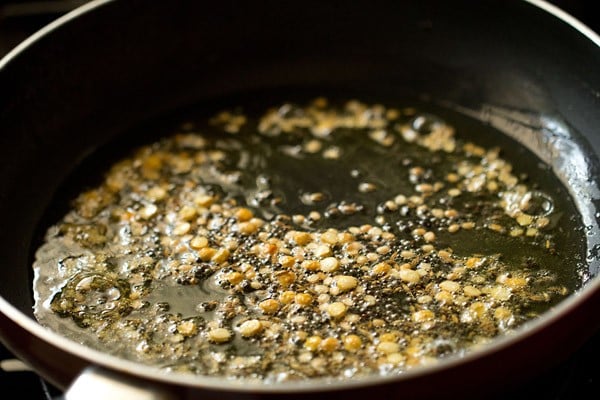
10. Immediately add 10 to 12 cashews and begin to fry on a low to medium-low heat.
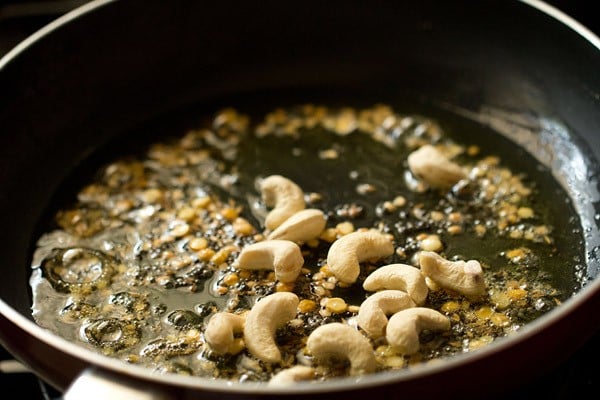
11. By the time the cashews get golden the dals should also be golden.
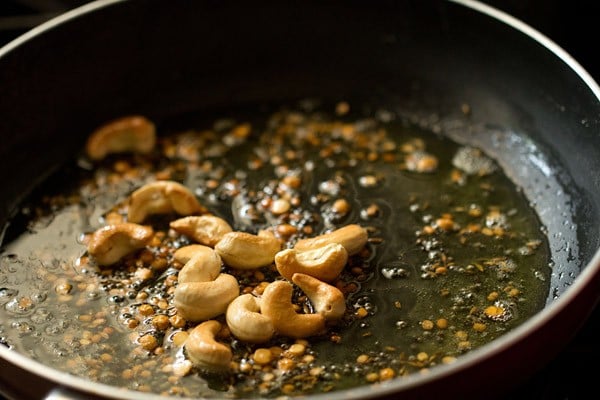 12. Now add the ⅓ cup of finely chopped onions.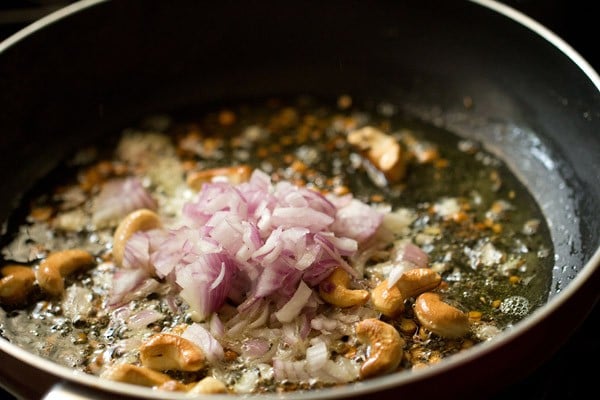
13. Sauté the onions until they soften and become translucent on a low to medium-low heat.
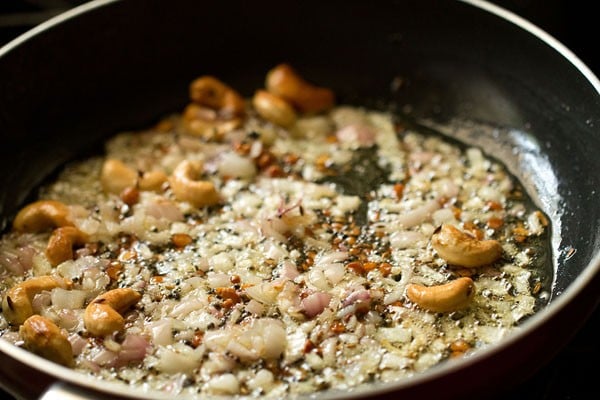
14. Then add 1 teaspoon chopped green chillies, 1 teaspoon chopped ginger and 8 to 10 curry leaves.
You can also add 1 dried red chilli (halved and with seeds removed) at this step.
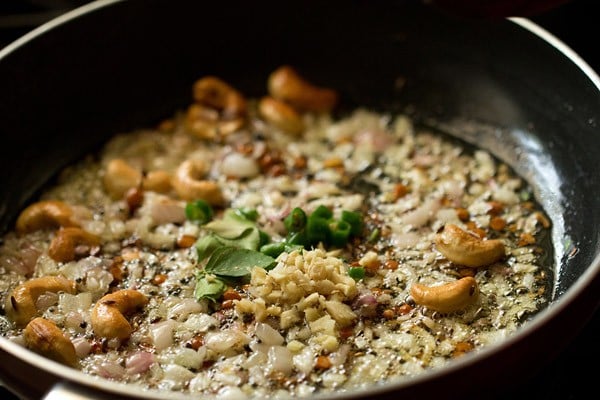
15. Mix well and sauté for a few seconds.
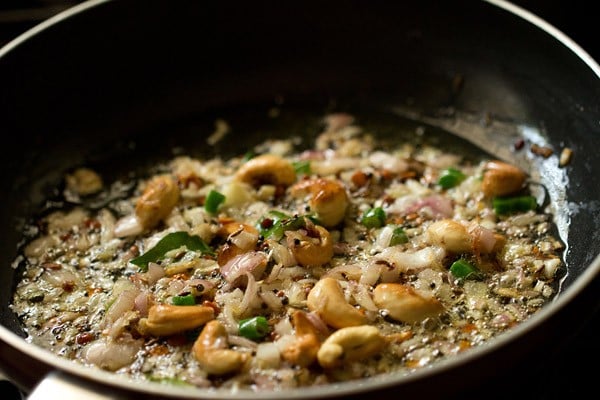
Boil Water
16. Then add 2.5 cups water to this mixture.
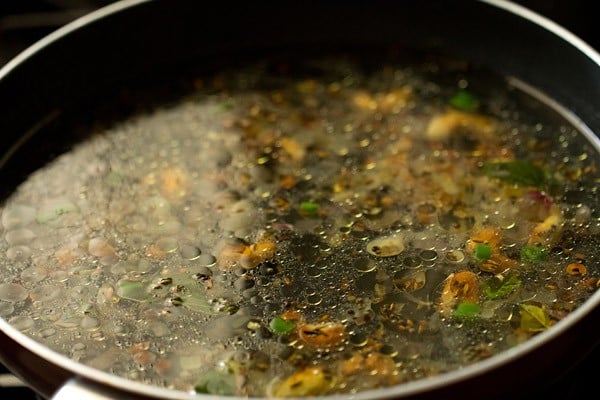
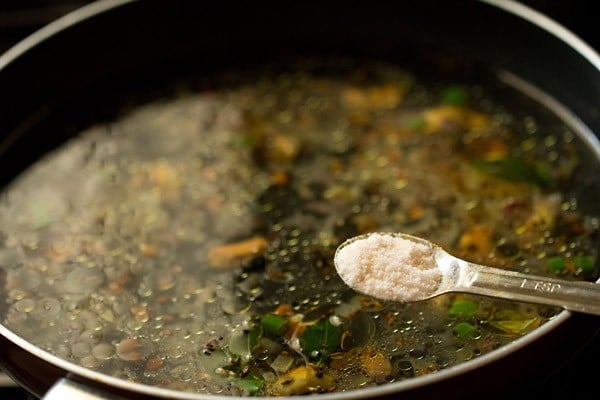
17. Add salt as required. Mix well and check the taste of water. It should be a bit salty but not too much.
In case if the salt becomes less in the dish, you can always sprinkle some salt from the top when eating.
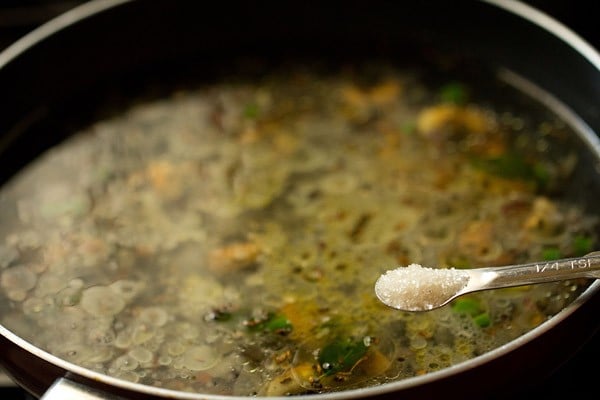
18. Then add 1 teaspoon sugar.
Sugar is optional and you can skip it. We prefer a slight sweet taste in the upma and hence we add it.
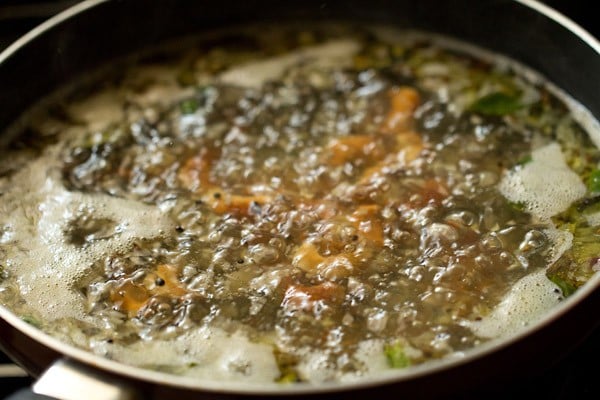
19. Stir again. On a medium to high flame, heat the water and let it come to a rolling boiling.
Make Rava Upma
20. When the water comes to a rolling boil, lower the flame to its lowest. Then add the rava in 4 to 5 batches with a spoon.
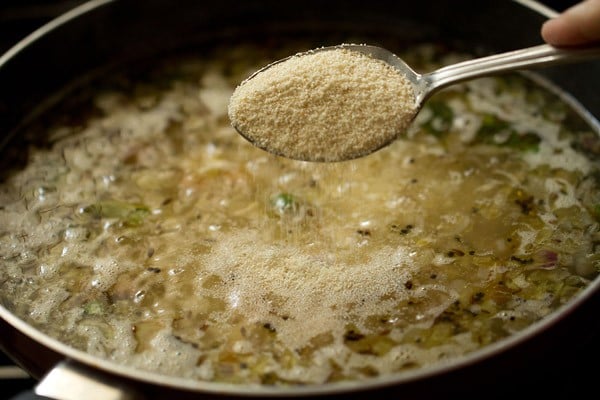
21. Once you add the first batch of rava, stir and mix immediately so that the roasted rava gets mixed evenly with the water.
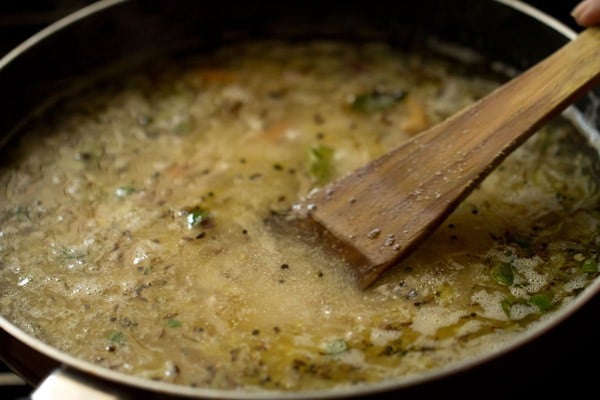
22. Then add the next batch of rava. Mix and stir again very well ensuring that the batch of rava is mixed evenly in water.
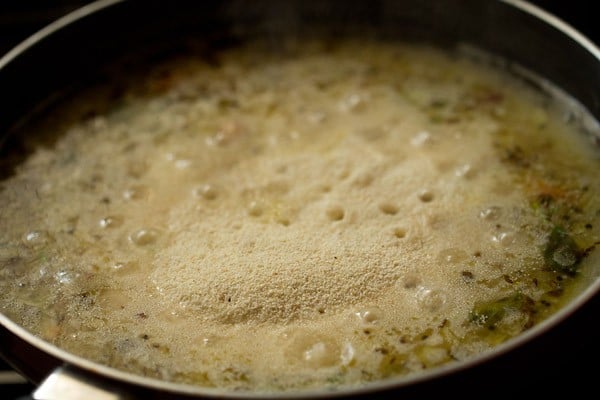
23. Continue to add and stir the rava up to the last batch.
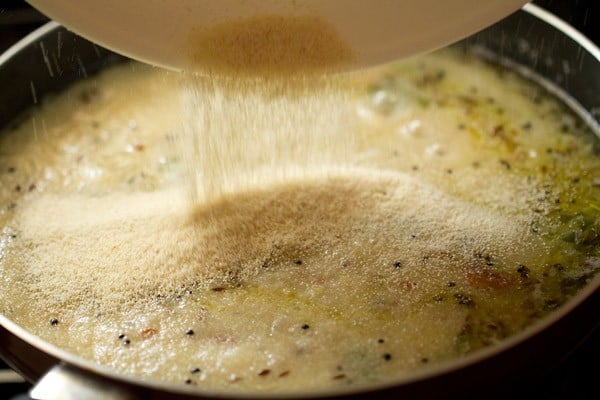
24. Quickly stir and mix very well. The rava grains will absorb water, swell and get cooked.
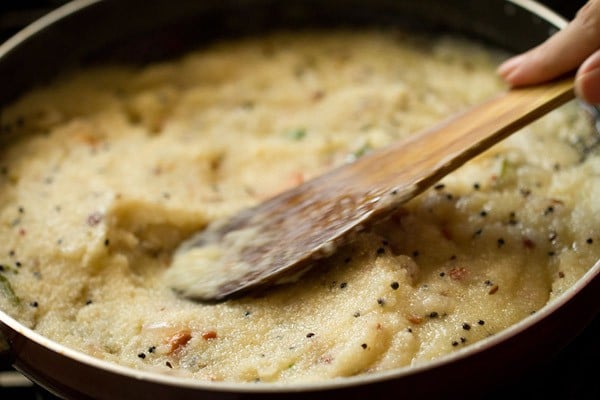
25. Cover and allow the rava upma to steam for 2 to 3 minutes on a low heat.
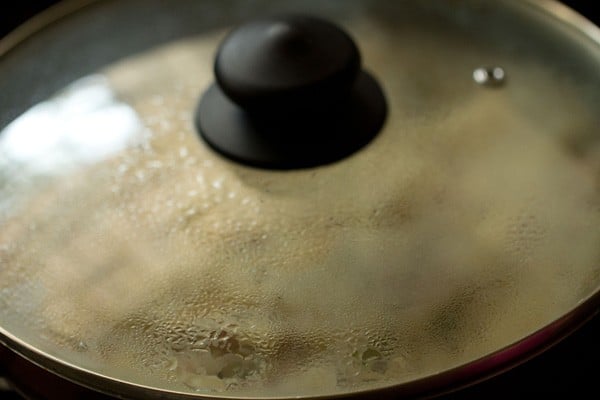
26. Then turn off the heat. In the below photo, the rava is cooked well and the suji ka upma is ready.
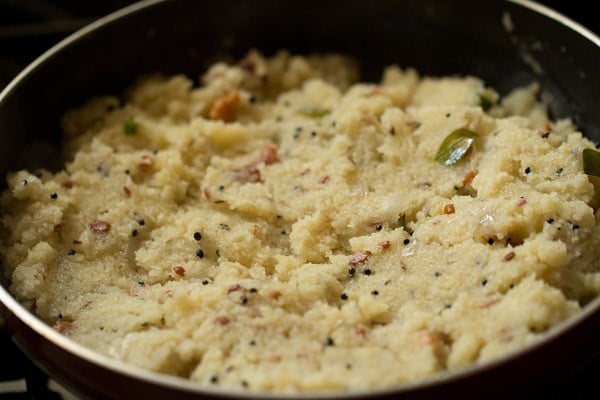
27. Lastly add about 2 tablespoons chopped coriander leaves (cilantro). You can add more coriander leaves if you like.
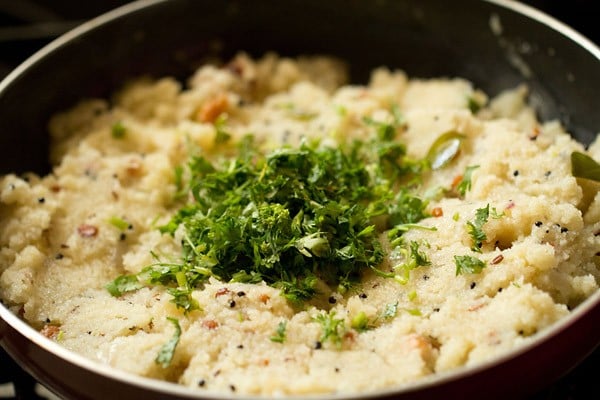
28. Mix again.
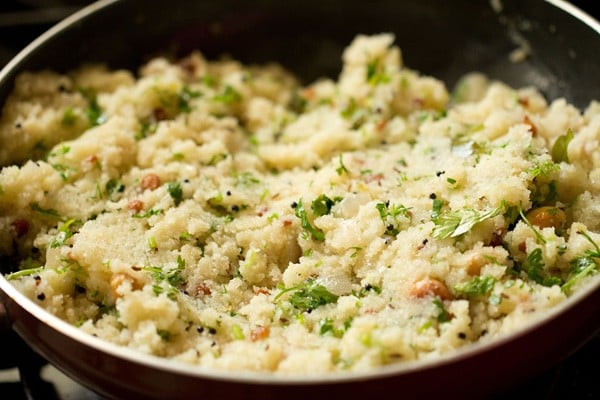
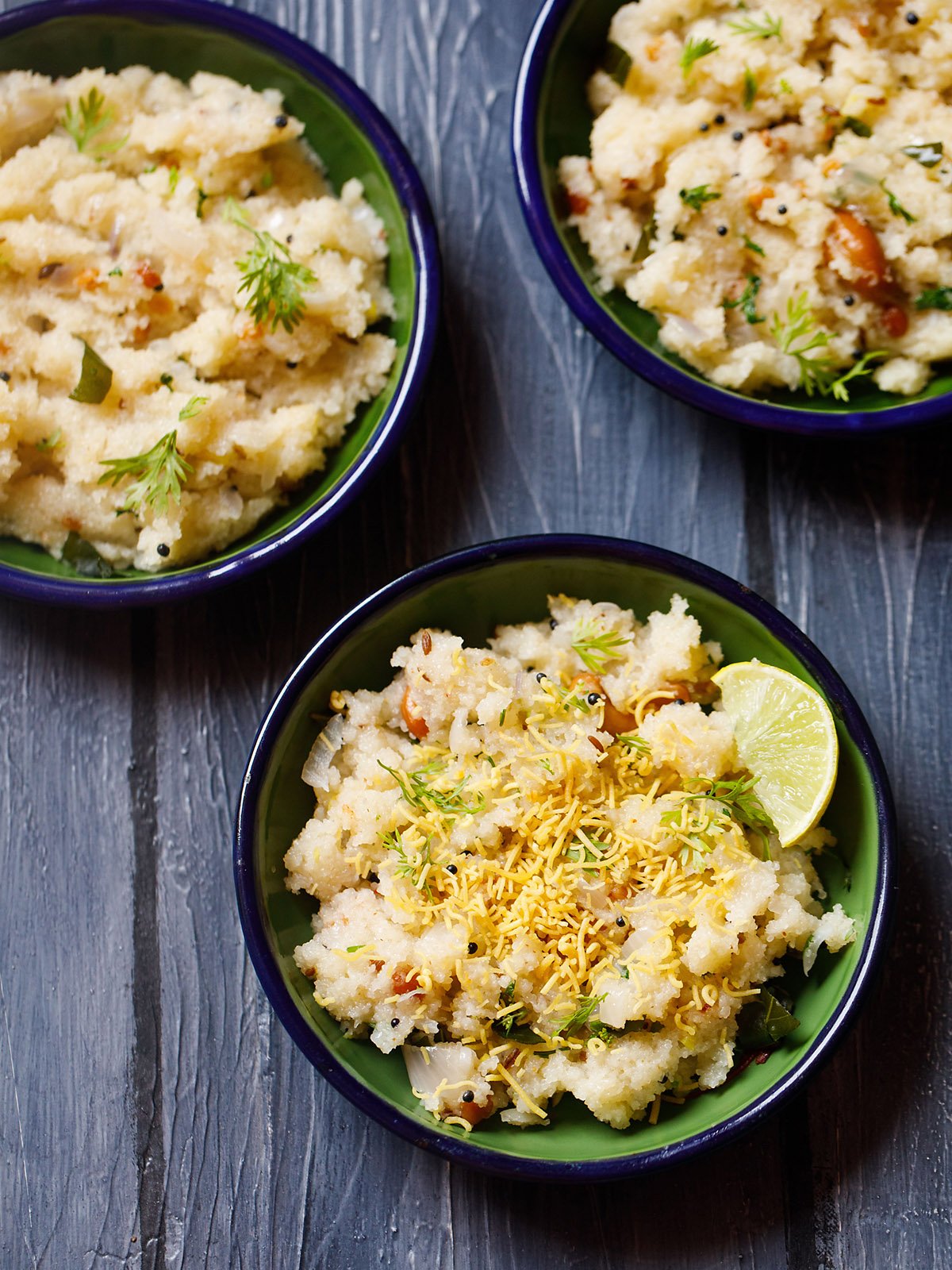
30. Serve upma hot or warm with slices of lemon or a side of lemon pickle or coconut chutney.
You can opt to drizzle half to one teaspoon of ghee while serving. If you like you can garnish with some coriander leaves.
I also sprinkle some sev (fried gram flour vermicelli) on upma while serving. Though this is not the way upma is traditionally served, the folks at home prefer this Mumbai style. You can also serve it with idli podi.
Expert Tips
- Roasting rava: For an even roasting or toasting of rava, you need to stir rava often on a low or medium-low heat of the pan. See for signs of color change and the rava granules looking separate, crisp with a nice toasted aroma.
- Adding rava in batches: Always add rava to the hot water in batches. After adding each batch mix the rava evenly with the water. This ensures that your upma will turn smooth and soft.
- Fats: Upma recipe can be made with both ghee (clarified butter) or oil. With ghee the suji ka upma tastes better though. You can even drizzle a bit of ghee when serving upma. I also on occasions make upma with coconut oil. You can use oils like sunflower oil or safflower oil or peanut oil or any neutral tasting oil.
- Rava and water proportion: For a softer rava upma, you can use the proportion of 1:2.5 or 3 for rava and water respectively. Which means that for 1 cup of fine rava you can add 2.5 to 3 cups water.
- Variations: There are a few variations, you can make like tomato upma recipe or vegetable upma or even ragi rava upma. I have listed them in the FAQs section below.
- Serving suggestions: Upma is best served piping hot or warm. Like me, you can top it up with some sev or bhujia with a drizzle of lemon juice. You can even serve suji ka upma with coconut chutney or lemon pickle or idli podi.
- Scaling and storing: You can easily halve or double this recipe. Leftover rava upma can be refrigerated for a couple of days. You can even freeze it. While reheating, sprinkle some water and reheat the upma in a pan.

This sounds great! I'm curious, how much mustard seed should I use in this recipe?
ReplyDelete